


Discovering Inner Calm Through Mindfulness Meditation
Table of Contents
- Understanding Mindfulness Meditation
- The Science Behind Mindfulness: Unpacking the Benefits
- Starting Your Mindfulness Meditation Journey
- Overcoming Common Hiccups for Starters
- Weaving Mindfulness Into Everyday Life
- Final Thoughts: Embrace Tranquility
Understanding Mindfulness Meditation
Mindfulness meditation is not some intricate ritual reserved for monks on a mountaintop. Think of it more as a mental exercise, where the focus is on the present moment — living it fully, noticing your thoughts, feelings, and physical sensations as they are. It seeks to create an awareness and intimacy with what’s happening inside and around you.
Dr. Jon Kabat-Zinn, a giant in the field of mindfulness-based stress reduction (MBSR), describes it as “the awareness that arises from paying attention, on purpose, in the present moment and non-judgmentally.” It’s a practice lauded for its ability to cut through stress and enhance emotional wellbeing.
The Science Behind Mindfulness: Unpacking the Benefits
The array of benefits linked to mindfulness meditation is backed by solid research. One 2014 study in “JAMA Internal Medicine” noted moderate improvements in anxiety, depression, and physical pain mere weeks into the practice. Harvard found a link between mindfulness and structural brain changes — reshaping regions tied to memory, sense of self, empathy, and stress handling.
The American Psychological Association adds to the dialogue by highlighting mindfulness’s impact on reducing rumination and boosting focus and memory. For those just starting, these advantages spotlight mindfulness as a key strategy against life’s emotional storms.
Starting Your Mindfulness Meditation Journey
- Intent Matters: Before you begin, clarify what you wish to achieve. Reducing anxiety? Gaining focus? Knowing your ‘why’ helps ground your practice.
- Find a Quiet Corner: A corner of quietude—not necessarily a sanctuary—where interruptions are minimal is enough. Comfort is key.
- Less is More at First: Initially, keep the sessions short—5 to 10 mins. You’ll find the right rhythm as comfort grows.
- Breath is Your Anchor: Direct your awareness to breathing. The feeling of each breath as it flows in and out. Use this rhythm as your focal point.
- Accept Wandering Thoughts: It’s natural for your mind to drift. When it does, bring it back gently to your breath.
- Drop the Judgments: Judge not your wandering mind. Recognize the drift and steer back without criticism.
- Create Routine: Stick with a set time daily to build it into habit. Repetition fortifies mindfulness’s benefits.
Overcoming Common Hiccups for Starters
For beginners, challenges aren’t uncommon. Restlessness, unfocused moments, and impatience can be frustrating. Here’s how to tackle them:
- Jittery Feels: Struggle sitting still? Try making meditation more active, with yoga or a stroll.
- Runaway Mind: Thoughts will wander. Acknowledge it and gently nudge attention back.
Rest assured, progress is gradual. Practice patience and kindness towards yourself.
Weaving Mindfulness Into Everyday Life
Mindfulness isn’t confined to meditation mats. Try mindful eating—savoring flavors and textures. On a walk, notice each step and the sounds around. This approach slowly becomes second nature, infusing calm into life’s very fabric.
Final Thoughts: Embrace Tranquility
Mindfulness meditation is less of a destination than a voyage towards self-awareness and tranquility. Over time, life’s chaos begins to quiet, revealing clarity and peace. Whether seeking less anxiety or more mental clarity, mindfulness is an integral facet of self-care.
Today marks the beginning of your transformative journey with just a few moments of mindfulness meditation. Step onto this path and let life’s whirlwind transform into a more serene voyage.
References
- JAMA Internal Medicine, 2014: Mindfulness Meditation Effects
- Harvard Research: Mindfulness and Brain Changes
- American Psychological Association: Mindfulness and Focus
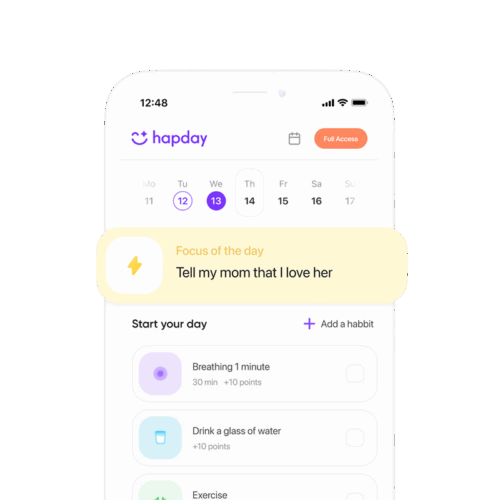
Join 1.5M+ people using Hapday’s AI-powered tools for better mental health, habits, and happiness. 90% of users report positive changes in 2 weeks.