


Finding Emotional Balance: Navigating the Storm
Table of Contents
- Grapple with Emotional Balance
- Mindfulness: Laying the Groundwork
- Syncing with Routine and Structure
- Nourishment and Movement
- Weaving Social Ties
- Gratitude and Positivity
- Unplugging for Balance
- A Pause, and a Beginning
Grapple with Emotional Balance
Achieving emotional balance—it’s about keeping your cool, no matter the storm. Think it means hiding emotions? Not at all. It’s about understanding them, responding wisely. A Yale study, back in 2019, stressed how important emotional regulation is. They link it to better mental health and a higher sense of satisfaction in life (Yale Center for Emotional Intelligence).
Mindfulness: Laying the Groundwork
Mindfulness isn’t just a buzzword; it’s foundational for emotional steadiness. Harvard Health talks up mindfulness for its stress-busting, focus-boosting, happiness-enhancing powers. At its heart? Living in the now, acknowledging thoughts and feelings without a judge’s gavel (Harvard Health, 2018).
Getting into Mindfulness:
- Deep Breathing: Just five minutes can work wonders. Helps trigger that calming parasympathetic system we all could use.
- Body Scan: Spend 10 minutes daily focusing on your body’s sensations. Become aware, regulate emotions better.
Syncing with Routine and Structure
Routine — not the enemy of spontaneity, rather the ally of calm. A piece in the Journal of Abnormal Child Psychology (2015) showed routines ease anxiety and support mood stability.
Creating a Balanced Routine:
- Morning Rituals: Start your day with calming activities. A short walk or journaling could be more liberating than you think.
- Regular Breaks: Prevent burnout with scheduled pauses. Practice a little mindfulness here, a dash of self-care there.
Nourishment and Movement
Our choices in food and activity ripple into every corner of our emotional wellbeing. A study in the International Journal of Behavioral Nutrition and Physical Activity (2017) draws connections between diet, exercise, and mental health.
Lifestyle Tips:
- Dietary Choices: Lean proteins, veggies, fruits—grains too. Omega-3s, found in fish and flaxseeds, can lift your spirits.
- Exercise: Target 150 minutes weekly. Yoga, tai chi, they’re great for more than just the body.
Weaving Social Ties
Even those of us who cherish solitude need a supportive crowd. A study reported in Psychological Science (2018) demonstrates how social connections aid emotional resilience and stress relief.
- Cultivate Connections: Share time with family and friends. They offer new perspectives and much-needed relief.
- Community Bonds: Engaging in group activities or support circles boosts belonging and emotional support.
Gratitude and Positivity
Gratitude and positive thinking: they don’t just lift you—they change you. Researchers at UC Berkeley (2020) found that these practices can reshape your brain for greater happiness, reduced stress, generally better living.
Gratitude Habits:
- Journaling: Note three things daily you’re grateful for. This reflection boosts emotional wellbeing.
- Affirmations: Kick off the day with positive affirmations; over time, they replace negativity with balance.
Unplugging for Balance
Overdosing on digital noise? A direct route to stress. The American Psychological Association’s research (2019) links constant digital engagement to increased anxiety and emotional imbalance.
- Limit Screen Time: Create tech-free zones, times for relaxation and reflection.
- Choosing Media Wisely: Be intentional, choose enriching over depleting content.
A Pause, and a Beginning
Emotional balance isn’t a destination; it’s a journey of various mindful practices, routines, lifestyle adjustments, and nourishing social ties. Embrace mindfulness, practice gratitude, manage stress, and nurture positive connections—each step fortifies your emotional world. Begin reaping these benefits today. Try one new practice now and watch your life get a bit more peaceful, a shade brighter.
Seek the calm you crave. Reclaim your inner peace with these essentials. Start small, trust that one change can make a difference.
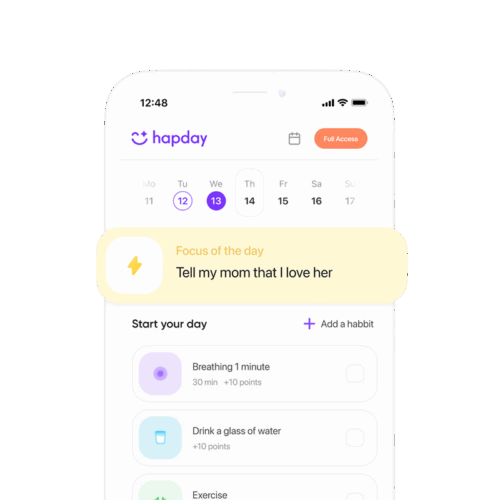
Join 1.5M+ people using Hapday’s AI-powered tools for better mental health, habits, and happiness. 90% of users report positive changes in 2 weeks.