
How to Understand and Regulate Your Emotions Without Feeling Overwhelmed
Emotions are powerful signals, yet many people experience them as overwhelming, confusing, or disruptive. When emotions rise quickly or intensely, it’s easy to feel out of control—leading to stress, avoidance, or emotional shutdown.
Emotional regulation is not about suppressing feelings. It’s about learning how to stay present with emotions without being consumed by them.
At MindHaven, we approach emotional regulation gently—through awareness, compassion, and practical tools that fit into real life.
Why Emotional Regulation Feels So Hard
Most people were never taught how to work with emotions. Instead, we learned to:
- Distract ourselves
- Push emotions aside
- React impulsively
- Feel guilty for feeling “too much”
This creates a cycle where emotions build up until they demand attention.
Understanding emotions is the first step toward regulating them.
What Emotional Regulation Really Means
Emotional regulation is the ability to:
- Notice emotions as they arise
- Pause before reacting
- Choose supportive responses
- Recover emotional balance
It doesn’t mean staying calm all the time. It means returning to calm more easily.
The Nervous System’s Role in Emotional Overwhelm
When emotions feel intense, your nervous system is often in a heightened state.
Signs include:
- Racing thoughts
- Tight chest
- Shallow breathing
- Restlessness
Regulating emotions often starts with regulating the body.
Gentle Tools for Emotional Regulation
1. Grounding Through the Senses
Bring attention to:
- What you can see
- What you can hear
- What you can physically feel
This anchors you in the present moment.
2. Breath as Emotional Anchor
Slow breathing signals safety to the nervous system. Try:
- Inhale for 4 seconds
- Exhale for 6 seconds
- Repeat for 2 minutes
3. Emotional Curiosity
Ask yourself:
“What is this emotion trying to tell me?”
Curiosity softens intensity.
Responding Instead of Reacting
When emotions spike, reactions are automatic. Regulation introduces space.
Pause → Observe → Choose
This small pause can change how emotions move through you.
Emotional Regulation in Daily Life
You don’t need perfect conditions to practice emotional regulation.
Try:
- Pausing before responding to messages
- Taking a breath during stressful moments
- Naming emotions internally
- Creating emotional rituals (even 5 minutes)
Consistency matters more than intensity.
When Guidance Helps
Some emotions feel too complex to navigate alone. Structured emotional support—especially reflective tools like AI coaching—can help clarify emotional patterns and offer calm, personalized insight.
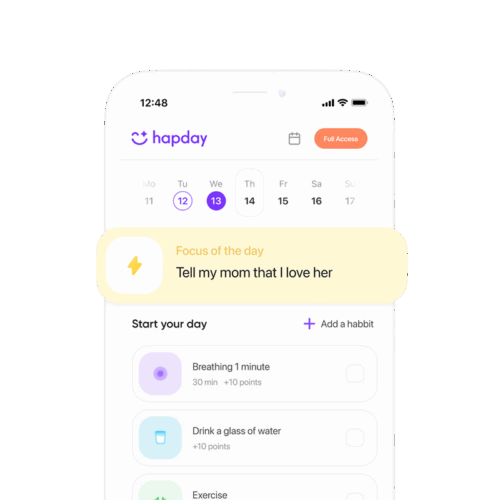
Join 1.5M+ people using Hapday’s AI-powered tools for better mental health, habits, and happiness. 90% of users report positive changes in 2 weeks.