


10 Pathways to Refresh Your Emotional Wellbeing Daily
Table of Contents
- Mornings of Mindful Gratitude
- Pause… Breathe Deeply
- Forge Genuine Connections
- Create—Let the Soul Speak
- Move, for Emotional Vitality
- Meditate to Meet Your Mind
- Feed Your Body, Nourish Your Soul
- Boundary Building
- Embrace Self-Compassion
- Cherish Rest and Sleep
- Sew Your Emotional Tapestry
Key Takeaways
- Practicing gratitude daily can significantly boost emotional wellbeing.
- Mindful breathing serves as a powerful tool for reducing stress.
- Building genuine connections fosters resilience and emotional health.
- Creative expression helps alleviate stress and enhances self-awareness.
- Establishing boundaries is crucial for maintaining personal space and mental clarity.
Every now and then, life hits you with a day where the weight of it all seems too much—Emily’s was such a day. The clock ticked as if announcing every second too loudly, and the emails lined up like demanding soldiers in her inbox. Breathing? Felt like sipping air through a straw. Can you relate? The chaos of our daily grind sometimes threatens to engulf us. But what if there were steps—easy, even mundane routines—that could tether us back to our center? Imagine weaving moments of serenity, growth, and happiness into the quilt of your everyday life. Feels like wishful thinking, or does it?
Join me as we delve into realistic, research-backed strategies to anchor your emotional health daily. These tips, likely drawn from 2023’s burgeoning wellness studies and experts’ insights, promise resilience and mindfulness in life’s hustle.
1. Mornings of Mindful Gratitude
Maya, at 28, faced the heavy curtain of divorce. Optimism? A stranger. A therapist suggestion—jotting three gratitudes each morning—seemed trivial, yet it nudged her focus back to life’s unnoticed richness. As Maya discovered, sometimes the smallest shifts create the grandest landscapes.
Why It Matters: Science tells us gratitude lifts moods, steers away loneliness, and even aids in restful sleep. In 2021, a study from Robert Emmons highlights how gratitude can be a balm for our isolated souls (Greater Good Science Center).
Your Small Step: Keep a journal by your bedside. On waking, pen down three things you’re thankful for—maybe the gentle whir of your coffee maker or the comforting voice of a friend. Expect no miracles, just soft whispers of change.
2. Pause… Breathe Deeply
Envision yourself, swamped with desk duties, deciding to pause. One deep breath, then another. The world regains color—a fleeting, yet refreshing slice of calm.
Why It Matters: Mindful breathing tames the body’s stress reactions, bringing under its spell the anxious heartbeat.
“Activate the parasympathetic and notice the peace.”
— Dr. Sarah Chen, NYU
Your Small Step: Spare five minutes. Sit quietly, let the world blur as you focus on each breath. Mind wandering? Gently coax it back to the inhalation. Not about doing it right, but simply being.
3. Forge Genuine Connections
John, a graphic designer of 33 years, found himself adrift in a new city. Isolated. Sporadic chats and joining a local circle of friends slowly built a fortress of belonging around him.
Why It Matters: Embracing meaningful ties is medicine for the soul. The Mayo Clinic’s data underscores how connections weave nets that catch us when life’s tumultuous.
Your Small Step: Daily outreach can be anything—a call, a meeting, a heartfelt exchange. Quality over quantity prevails; connect deeply, and authentically.
4. Create—Let the Soul Speak
Remember childhood’s effortless creativity? Painting, dancing—all without a critic. These outlets still harbor keys to emotional sustenance.
Why It Matters: Non-verbal expression through creativity ventures beyond words, unclothing stress. As noted by the American Art Therapy Association, it lights up brain pathways and illuminates self-awareness.
Your Small Step: Set time to dance with your creative side—be it scribbling words or splashing colors. No masterpieces needed; just venture into joyous expression. It’s about freedom, not perfection.
5. Move, for Emotional Vitality
Carla, at the tender age of 25, embraced yoga amidst the storm of workplace stress. Her spirit found sanctuary in the gentle rhythm of movement.
Why It Matters: Exercise releases endorphins—the body’s feel-good chemicals, which shield against anxiety and depression. APA asserts regular moves build self-esteem fortresses.
Your Small Step: Secure 30 minutes for activity on most days. Choose anything—from serene yoga to energetic dance. Consistency weaves a stronger thread than even the most vigorous exertion.
6. Meditate to Meet Your Mind
Initially, meditation might seem a vast, silent void. Yet picture it as your quiet room—a sanctuary amidst life’s clamor, a space for unbiased thought-watching.
Why It Matters: Heaps of research, including one from Harvard, points to meditation’s brain-altering powers, enhancing learning, memory, and emotional temperance.
Your Small Step: Embark with five daily minutes. Embrace your breath and let thoughts float by, unengaged. Apps like Headspace offer gentle guidance for beginners.
7. Feed Your Body, Nourish Your Soul
Emily found her diet of caffeinated, processed chaos mirrored her mental unrest. Whole foods and mindful bites recalibrated her energy and stability.
Why It Matters: Nutrition’s impact on emotional health is no secret. The NIH emphasizes the brain thrives on a well-rounded diet, aiding both physical and emotional pursuits.
Your Small Step: Fill your plate with vibrancy—fresh fruits, wholehearted grains. Chew slowly, savor flavors, fostering a conversation with food.
8. Boundary Building
Lisa was once a slave to after-hours emails, ensnared by work’s unyielding grip. Crafting boundaries reclaimed her personal space and mental clarity.
Why It Matters: Boundary-setting guards against burnout and nurtures emotional reserves. As CDC notes, such practices buffer stress, fostering autonomy.
Your Small Step: Speak them clearly. Start modestly—like screen-free evenings—and broaden as you feel empowered. Your time is precious; protect its sanctity.
9. Embrace Self-Compassion
In a storm of self-reproach post-work faux pas, Alex spiraled. Therapy brought him self-compassion, befriending himself as he’d a dear comrade.
Why It Matters: Self-kindness shields against stress overload, according to Kristin Neff. It’s about embracing humanity’s imperfections, a balm to stress.
Your Small Step: Encounter failure with a pause. Extend the kindness you’d show a friend to yourself. Acknowledge—imperfection is inherently human.
10. Cherish Rest and Sleep
Jack, a sleepless consultant, prided his midnight labors—until exhaustion urged him differently. In choosing sleep as an ally, he discovered creativity anew.
Why It Matters: Sleep’s foundation cradles both mind and body. CDC clarifies sleep deficiency harms memory and mood, jeopardizing health.
Your Small Step: Curate a calming sleep ritual. Sip tea, read quietly—signaling the body. Aim for seven to nine hours, aligning with your natural rhythm.
Sew Your Emotional Tapestry
Each sunrise is a ticket to nourish your soul. Whether through gratitude, breath focus, laughter with friends, or vibrant creative expression—lay stones in emotional strength’s path.
Consider these practices—tools, cozy safety nets for life’s winds. They anchor you, gentle reminders that build you into a sturdier version of yourself over time.
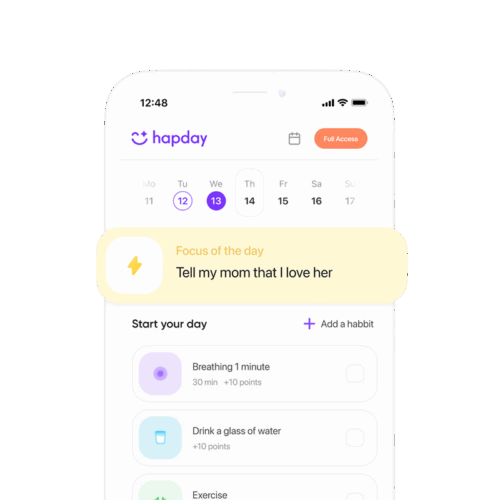
And if your path seeks companionship, explore Hapday AI Life Coach. Its whisper-gentle guidance might just complement your journey toward an aligned, mindful existence.
Embrace, explore, and carve patience into your growth’s testament. Stay gentle with yourself and observe quietly as each day contributes to your unfolding story of resilience and peace.
The Bottom Line
Each step toward enhancing your emotional wellbeing can lead to significant improvements in your mental health and overall happiness. By integrating simple practices into your daily routine, you not only cultivate resilience but also enrich your life with moments of joy and peace.
Join 1.5M+ people using Hapday’s AI-powered tools for better mental health, habits, and happiness. 90% of users report positive changes in 2 weeks.