



Cultivating Emotional Balance: A Path to Well-Being
Table of Contents
- Mindfulness Meditation
- Establishing Routine
- Physical Activity
- Cultivating Connections
- Prioritizing Sleep
- Embracing Gratitude
- Managing Technology
- Seeking Help
- The Healing Power of Nature
- Nurturing Self-Compassion
- A Journey Towards Balance
In today’s whirlwind world, reaching a state of emotional balance can sometimes feel like grasping at smoke. We’ve got the pressures of work, the weight of personal responsibilities, and the ever-constant buzz from our digital lives. Yet, achieving emotional steadiness is vital for overall health—it acts as the backbone of our resilience. How can we handle the highs and lows of life without it? Below, I explore a number of practical—and scientifically supported—methods to nurture this crucial equilibrium.
Mindfulness Meditation
Mindfulness meditation stands out as one of the most effective practices. It’s all about being present—fully, without judgment. Back in 2014, a study in Psychosomatic Medicine revealed fascinating insights: people who practiced mindfulness displayed less activity in brain regions tied to stress. Just dedicating a few moments a day to this practice can be transformative. Doesn’t everyone have a few moments to spare?
Establishing Routine
Having a daily routine is more than just a nice idea; it’s a lifeline for emotional stability. The American Psychological Association has highlighted the correlation between regular routines and heightened happiness. Routines create predictability, anchoring us amidst the chaos. Isn’t it comforting to know that?
Physical Activity
We often talk about the physical perks of exercise, but its impact on emotions shouldn’t be overlooked. Exercise boosts those feel-good chemicals known as endorphins. The Journal of Clinical Psychiatry has reported that regular physical activity can alleviate symptoms of depression. Just imagine—a daily jog could be the perfect antidote for a heavy heart!
Cultivating Connections
At our core, we’re social creatures. A Harvard study—spanning over eight decades—affirmed that strong social ties enhance mental health. Whether it’s a chat over coffee or a call to a loved one, these connections fortify our emotional armor. Sometimes, picking up the phone is more than just a call; it’s a lifeline.
Prioritizing Sleep
Sleep, the often-overlooked hero of emotional health. When we’re sleep-deprived, emotions can spiral. The CDC recommends a nightly 7-9-hour window for adults. Establishing pre-sleep rituals can make a world of difference. A good night’s sleep? It might just be the key to unlocking a brighter mood.
Embracing Gratitude
Practicing gratitude is more powerful than one might think. The Emotion journal shared findings that gratitude boosts satisfaction and diminishes depression. Keeping a gratitude journal feels like a small effort, but its ripple effects are profound. Isn’t there always something to be thankful for?
Managing Technology
As much as tech connects us, it can also stress us. A study from the Journal of Social and Clinical Psychology posited that reducing social media use to 30 minutes daily decreases loneliness. Being mindful about tech use isn’t just wise—it’s essential.
Seeking Help
If emotions start to overwhelm, reaching out to a professional is a courageous step. Techniques like Cognitive Behavioral Therapy have proven effective in navigating emotional waters. Therapy isn’t a sign of weakness—it’s the opposite, a strength.
The Healing Power of Nature
Nature has an uncanny ability to soothe. Just five minutes spent outdoors can do wonders for our mood, as Environmental Science & Technology points out. Whether it’s a simple stroll or some gardening, nature beckons us with open arms.
Nurturing Self-Compassion
Being gentle with oneself is essential. Kristin Neff’s research shows that self-compassion leads to greater emotional resilience. By embracing imperfections, we create a foundation of strength. After all, who among us is flawless?
A Journey Towards Balance
Emotional balance is not a destination but a journey, requiring constant care and integration into our lives. By practicing mindfulness, moving our bodies, and connecting with gratitude, we set the stage for a life of equanimity and joy.
Take a step today—embrace one of these practices. Notice how the landscape of your emotions transforms.
A Nod to the Sources
- Psychosomatic Medicine Journal
- American Psychological Association
- Journal of Clinical Psychiatry
- Emotion Journal
- Journal of Social and Clinical Psychology
- Environmental Science & Technology
- Kristin Neff’s Research
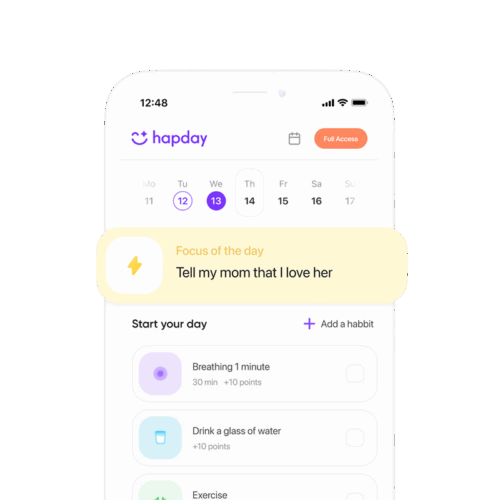
Join 1.5M+ people using Hapday’s AI-powered tools for better mental health, habits, and happiness. 90% of users report positive changes in 2 weeks.