


Mindful Living: Tips for Regulating Emotions
Table of Contents
- Decoding Emotional Regulation
- Mindful Living’s Role in Emotional Regulation
- Strategies for Mindful Emotional Regulation
- Engage in Mindful Breathing
- Try Meditation
- Experiment with Body Scans
- Practice Mindful Listening
- Adopt a Gratitude Routine
- Employ Progressive Muscle Relaxation
- Keep a Thought Journal
- Implementing Mindful Living Daily
- Final Musings
Decoding Emotional Regulation
What exactly does emotional regulation mean? It’s about managing one’s emotional journey—acknowledging feelings, comprehending them, and modulating emotional responses. The American Psychological Association tells us that effective emotional regulation links to increased well-being, enhanced relationships, and even physical health improvements. Can’t we all benefit from that?
Mindful Living’s Role in Emotional Regulation
Living mindfully—or being fully present, aware—is akin to giving emotions a space to be noticed without casting judgment. The journal Emotion once highlighted how those who engage in mindfulness tend to excel at recognizing and managing their emotions. Curious, isn’t it?
Strategies for Mindful Emotional Regulation
- Engage in Mindful Breathing
Breathing sounds simple, doesn’t it? When emotions surge, so does our breath. But slowing it down—taking deliberate, deep breaths—calms not just the mind, but also the body. Even Psychosomatic Medicine pointed out how this practice might reduce cortisol, that pesky stress hormone.
- Try Meditation
Meditation is more than just sitting quietly; it’s about tuning into a serene awareness. All it takes is five minutes per day, really. Isn’t that worth the potential result? Clinical Psychology Review reported that meditation boosts emotional stability and resilience to stress.
- Experiment with Body Scans
By performing a body scan, you simply observe physical sensations. You’re not trying to change anything. This mindfulness technique is about getting to know both physical and emotional states better. According to the Journal of Behavioral Medicine, this practice may lower anxiety levels. Relaxation, anyone?
- Practice Mindful Listening
Truly listening—without mentally drafting your response—can transform conversations. This approach prevents misunderstandings, fostering better connections. The International Journal of Listening said it enhances emotional smarts and relationships. It seems we could all listen a bit more closely, right?
- Adopt a Gratitude Routine
Taking stock of what you’re thankful for at day’s start or end can shift your emotional landscape. Gratitude, as explored by the Journal of Happiness Studies, might just boost happiness and health. Imagine starting each day with a thankful heart…
- Employ Progressive Muscle Relaxation
Tensing, then releasing muscles may relieve those physical stress knots. This strategy makes us acutely aware of our body’s subtle cues toward our emotional state. For emotional regulation, understanding this connection matters.
- Keep a Thought Journal
Journals offer a sanctuary for exploring emotions—a ‘safe’ space. By committing your thoughts to paper (or screen), clarity can emerge. The Journal of Research in Personality affirmed that those who engage in mindful journaling often gain emotional insight. Worth a try, don’t you think?
Implementing Mindful Living Daily
How can we incorporate these practices into everyday life? During tense meetings, try focusing on your breath to remain calm. In conflicts, practice listening—mindfully—and avoid escalation. And at the end of any gnarly day? Perhaps reach for that journal or conduct a body scan to decompress.
By embracing these tactics, we shape healthier emotional regulation capabilities—boosting both mental and emotional health, and by extension, our everyday experiences.
Final Musings
Mindful living is not just a buzzword. It’s a repository of tools that enhance emotional regulation. By being present, we gain clarity about our feelings and foster thoughtful responses. Meditation, gratitude, listening—these aren’t just practices; they’re steps toward genuine growth and emotional harmony.
To live a more balanced life, why not start one of these practices today? Mindful living might just become your path to inner peace. Start embracing balance in life’s whirlwind…and see where it leads.
References
- Emotion – Mindfulness and Emotional Regulation
- Clinical Psychology Review – Meditation and Emotional Stability
- Journal of Behavioral Medicine – Body Scans
- International Journal of Listening – Mindful Listening
- Journal of Happiness Studies – Gratitude Practice
Stay engaged with MindHaven for more insights into mindful living. Unlock this potential today and transform your world!
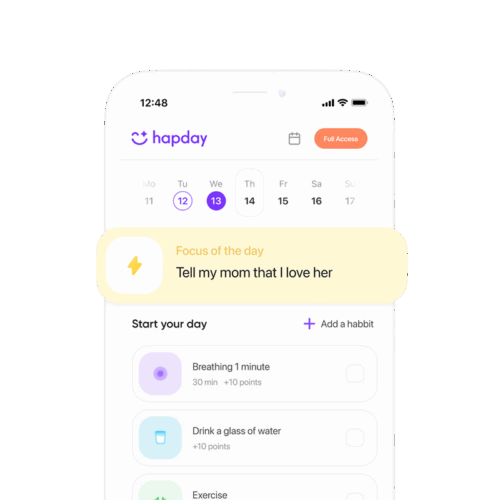
Join 1.5M+ people using Hapday’s AI-powered tools for better mental health, habits, and happiness. 90% of users report positive changes in 2 weeks.